Give Maloney-Shamie-Hura Vision Institute a phone call at (310) 882-6365
Book Now Opens in new window Contact

Understanding Corneal Health

The cornea is the clear, dome-shaped surface that covers the front of the eye and plays a critical role in focusing light. It must remain smooth, transparent, and properly curved for sharp, comfortable vision. When the cornea becomes irregular, swollen, or scarred, vision can blur or distort, sometimes severely.

At Maloney-Shamie-Hura Vision Institute, our team of fellowship-trained corneal specialists diagnose and treat the full spectrum of corneal diseases, from mild irritation to complex endothelial disorders. We use the latest diagnostic imaging and surgical technologies to restore vision with precision and care.

Who May Need Corneal Treatment

Corneal conditions can affect anyone, but symptoms often appear gradually, making early detection essential. You may need corneal evaluation or treatment if you:

  • Experience persistent eye discomfort, dryness, or irritation
  • Notice blurred or cloudy vision that does not improve with glasses
  • See halos, glare, or starbursts around lights
  • Have increased light sensitivity
  • Experience reduced night vision or visual distortion

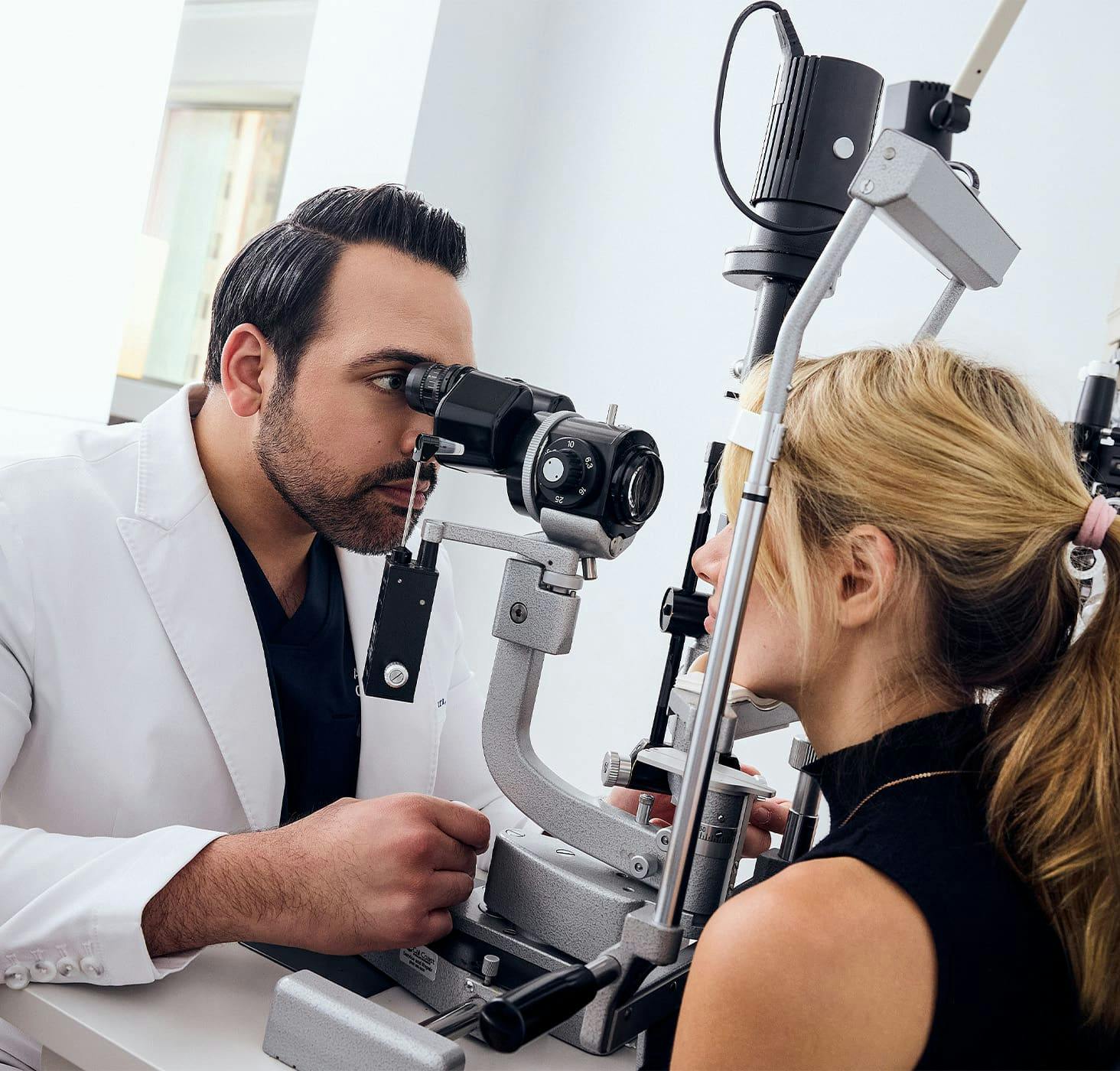
Our diagnostic process includes high-resolution corneal topography and pachymetry, which allow our surgeons to measure corneal thickness, curvature, and clarity with exact precision. These findings guide a treatment plan tailored specifically to your condition.


Common Corneal Conditions Treated at MSH Vision

The cornea can be affected by a variety of conditions—some structural, others degenerative or inflammatory. Our specialists diagnose and treat all forms, from common to complex. Common corneal conditions include:

  • Keratoconus: Progressive thinning and bulging of the cornea that causes distorted vision; often treated with corneal cross-linking.
  • Fuchs’ Endothelial Dystrophy: A genetic condition that causes the inner corneal layer (endothelium) to fail, leading to swelling and cloudy vision.
  • Corneal Edema: Fluid buildup that causes discomfort and blurred sight, often resulting from endothelial dysfunction or prior surgery.
  • Corneal Scarring: Damage from infection, trauma, or prior disease that affects transparency.
  • Pterygium: A benign growth on the cornea or conjunctiva often caused by UV exposure.
  • Corneal Infections or Ulcers: Typically bacterial, viral, or fungal in nature, requiring prompt medical treatment to prevent vision loss

No two corneal conditions are alike, which is why every diagnosis and treatment plan at MSH Vision is completely customized.

Schedule a Consultation

Contact Us
Contact media
Contact media

Treatment Options for Corneal Disease

MSH Vision offers the most advanced and effective treatments available for corneal disease: from medical management to sophisticated surgical restoration. Our goal is always to preserve the natural cornea whenever possible and restore comfort and vision when intervention is needed.

eye icon

Non-Surgical and Early-Stage Treatments

In mild or early cases, medical therapies may stabilize the cornea or prevent further damage.

Options include:

  • Prescription eye drops to control swelling or inflammation
  • Specialty contact lenses to improve vision and comfort
  • Corneal cross-linking for early keratoconus to strengthen the corneal tissue
eye icon

DMEK and DSEK: Advanced Corneal Transplantation

When corneal damage or disease affects the inner layer (endothelium), transplantation may be necessary. At MSH Vision, our surgeons perform the most advanced techniques, DMEK and DSEK, to replace only the diseased layer, preserving the rest of your cornea for faster, clearer healing.

DMEK (Descemet Membrane Endothelial Keratoplasty)
This ultra-thin transplant replaces just the innermost cell layer of the cornea, the Descemet membrane and endothelium. It provides the most natural optical quality and fastest recovery among all transplant methods.

Benefits:

  • Exceptional clarity and minimal visual distortion
  • Small incision with rapid healing
  • Low risk of rejection or complications
  • Outpatient procedure with little discomfort

DSEK (Descemet Stripping Endothelial Keratoplasty)
DSEK replaces a slightly thicker layer of corneal tissue than DMEK and is recommended for certain anatomical or surgical cases.

Benefits:

  • Improved vision within weeks
  • Strong graft adhesion and stability
  • Proven long-term results for corneal endothelial disease

Your surgeon will determine whether DMEK or DSEK is best for your eyes based on corneal thickness, clarity, and the underlying diagnosis. Both techniques provide dramatic improvement in vision and quality of life for patients with advanced corneal conditions.

Frequently Asked Questions Cornea Conditions

Is a corneal transplant painful?

No. These procedures are performed under local anesthesia with sedation. Patients typically experience mild irritation during the early healing period.

What is the difference between DMEK and DSEK?

DMEK replaces only the thinnest layer of corneal tissue, providing sharper vision and faster recovery, while DSEK replaces a slightly thicker layer and is better suited to certain eye anatomies.

How long is recovery after corneal transplant surgery?

Most patients notice significant improvement in vision within weeks. Full stabilization may take several months as the cornea adapts and heals.

Will I need another transplant later in life?

Corneal transplants often last for decades. With proper care and follow-up, the graft can remain clear indefinitely.

Are corneal diseases hereditary?

Some, such as Fuchs’ dystrophy and keratoconus, can have genetic components. Regular eye exams help detect these conditions early for timely treatment.

Restore Clarity and Comfort with Expert Corneal Care

The cornea plays a vital role in how clearly you see the world and when it becomes compromised, expert care makes all the difference. At Maloney-Shamie-Hura Vision Institute, our surgeons bring world-class expertise to every stage of corneal treatment, from early management to advanced DMEK and DSEK transplantation. Our goal is to restore not only vision, but also comfort, confidence, and quality of life for every patient.

Schedule your corneal evaluation today at MSH Vision in Los Angeles or Pasadena and take the first step toward clearer, healthier eyes.

close up of mossy tree

Follow Us on Social Media Behind the Scrubs. Beyond the Website.

Get to know the people behind your care — patient stories, personal moments, and expert insights.

Ready to See More Clearly at Any Stage of Life?

Searching for your glasses on the nightstand, struggling with contacts during workouts, or noticing your vision becoming cloudy with age - these experiences are common. 

Today’s modern vision corrections procedures - Wavelight Plus LASIK, EVO ICL, Refractive Lens Exchange, and advanced lens laser cataract surgery have allowed tens of millions of people to achieve clearer vision while eliminating or reducing their dependence on glasses and contact lenses. 

Schedule a Consultation
Contact us media
Contact us media
Accessibility: If you are vision-impaired or have some other impairment covered by the Americans with Disabilities Act or a similar law, and you wish to discuss potential accommodations related to using this website, please contact our Accessibility Manager at (310) 882-6365.
Contact Us