Give Maloney-Shamie-Hura Vision Institute a phone call at (310) 882-6365
Book Now Opens in new window Contact

Overview A Modern Approach to Glaucoma Surgery

Glaucoma is a chronic eye disease that damages the optic nerve, often caused by increased intraocular pressure. If untreated, it can lead to progressive and irreversible vision loss. For decades, treatment options focused on medications, laser therapy, or more invasive surgeries such as trabeculectomy or drainage implants.

Minimally Invasive Glaucoma Surgery (MIGS) represents the next generation of glaucoma treatment. These procedures use microscopic instruments or tiny stents to improve the eye’s natural drainage system and reduce pressure with less tissue disruption.

At Maloney-Shamie-Hura Vision Institute, our surgeons offer a full spectrum of MIGS procedures tailored to each patient’s condition, providing safe, effective, and lasting glaucoma control with faster recovery and fewer complications. MIGS procedures are performed in conjunction with cataract surgery, making them an ideal option for patients managing both conditions simultaneously.

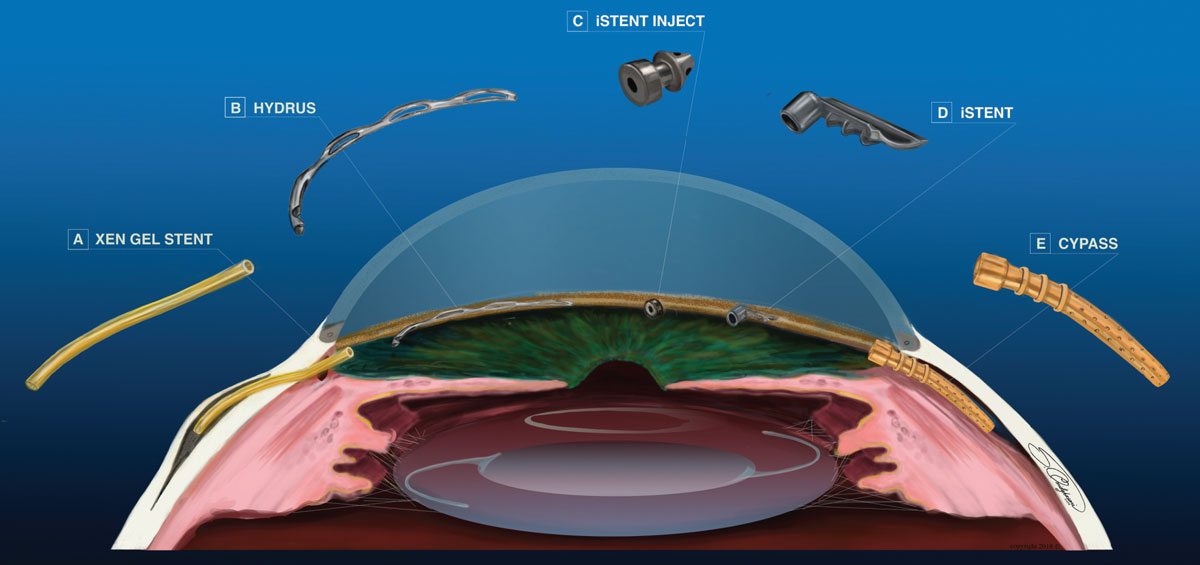
Each of these MIGS procedures can reduce intraocular pressure, but in distinctly different ways

Candidacy: Who Can Benefit from MIGS

Not every glaucoma patient requires or qualifies for traditional surgery. MIGS bridges the gap between medication therapy and major operations, offering an ideal solution for many people with early to moderate disease. You may be a good candidate for MIGS if you:

  • Have been diagnosed with open-angle glaucoma that is not well-controlled with drops or laser treatment
  • Are scheduled for cataract surgery and have glaucoma that would benefit from a combined approach
  • Rely on multiple medications and wish to reduce or eliminate daily use
  • Have mild to moderate glaucoma rather than advanced disease
  • Have healthy eye anatomy suitable for minimally invasive devices
  • Please note: At MSH Vision, MIGS is performed exclusively in combination with cataract surgery. Patients seeking standalone glaucoma surgery will be referred to a glaucoma specialist.

During your consultation, your MSH Vision surgeon will perform advanced diagnostic imaging, evaluate your eye pressure, and determine which MIGS technique best fits your medical and visual goals.

Banner media

Benefits and Risks of MIGS Glaucoma Treatment

eye icon

The Benefits of Minimally Invasive Glaucoma Surgery

MIGS procedures are designed to be safer and more comfortable while still achieving effective pressure reduction. Advantages include:

  • Smaller incisions and minimal tissue disruption
  • Shorter surgical time and quicker recovery
  • Lower risk of serious complications compared with traditional surgery
  • Reduction or elimination of glaucoma medications for many patients
  • Performed during cataract surgery - addressing both conditions in a single procedure, single recovery
  • Preservation of future surgical options

For many patients, MIGS provides the freedom to live with fewer drops and less anxiety about daily pressure control.

eye icon

Potential Risks to Consider

While MIGS is safer than conventional glaucoma surgery, every operation carries some risk. Complications are uncommon but may include:

  • Temporary or incomplete pressure reduction
  • Need for additional procedures if pressure remains high
  • Mild bleeding or inflammation
  • Infection or scarring at the surgical site
  • Stent-related issues such as blockage or misplacement

At MSH Vision, safety is our top priority. Our surgeons perform detailed preoperative evaluations and provide thorough postoperative monitoring to ensure optimal outcomes.

Schedule a Consultation

Contact Us
Contact media
Contact media
female patient walking with staff member

Recovery: What to Expect After MIGS Surgery

At MSH Vision, MIGS is performed as part of your cataract surgery, an outpatient procedure under local anesthesia with mild sedation. Typical recovery experience:

  • Use prescribed eye drops to prevent inflammation and infection
  • Avoid rubbing or applying pressure to the eye for several days
  • Rest on the day of surgery and resume light activities soon after
  • Attend follow-up appointments to check healing and eye pressure
  • Experience improved comfort and stable pressure within weeks

Because MIGS preserves the eye’s natural tissue, recovery is faster and less disruptive than older surgical methods. Most patients resume normal routines quickly while maintaining clear, comfortable vision.

Frequently Asked Questions MIGS

What does MIGS stand for?

MIGS means Minimally Invasive Glaucoma Surgery, a group of procedures that lower eye pressure through micro-sized incisions and specialized implants.

How does MIGS differ from traditional glaucoma surgery?

Traditional surgeries create new drainage channels and often require sutures and longer healing. MIGS uses tiny stents or devices that enhance the eye’s natural outflow system with much less trauma.

Will MIGS cure my glaucoma?

No surgery can cure glaucoma or restore lost vision. The goal of MIGS is to slow or stop progression by maintaining healthy pressure levels.

Can MIGS be done at the same time as cataract surgery?

Yes. Combining MIGS with cataract removal is common and allows both conditions to be treated during a single procedure.

Will I still need eye drops afterward?

Many patients reduce or eliminate drops after MIGS, but some may still require medication depending on disease severity and target pressure.

Follow Us on Social Media Behind the Scrubs. Beyond the Website.

Get to know the people behind your care — patient stories, personal moments, and expert insights.

Ready to See More Clearly at Any Stage of Life?

Searching for your glasses on the nightstand, struggling with contacts during workouts, or noticing your vision becoming cloudy with age - these experiences are common. 

Today’s modern vision corrections procedures - Wavelight Plus LASIK, EVO ICL, Refractive Lens Exchange, and advanced lens laser cataract surgery have allowed tens of millions of people to achieve clearer vision while eliminating or reducing their dependence on glasses and contact lenses. 

Schedule a Consultation
Contact us media
Contact us media
Accessibility: If you are vision-impaired or have some other impairment covered by the Americans with Disabilities Act or a similar law, and you wish to discuss potential accommodations related to using this website, please contact our Accessibility Manager at (310) 882-6365.
Contact Us